




3×3 basketball has rapidly become one of the most exciting versions of the sport. From neighbourhood courts in Singapore to international competitions organised by FIBA, the game has exploded in popularity because of its speed, intensity, and simplicity. But many players who are familiar with traditional basketball still ask the same question: what are the rules of 3×3 basketball?
At first glance, 3×3 basketball looks similar to normal basketball. There is still dribbling, shooting, defending, and passing. But once the game starts, the differences become obvious very quickly. The rules are faster, the decisions are quicker, and the physical demands are much higher.
Understanding these rules is important because they directly affect how players approach basketball training, conditioning, and game strategy.
The biggest difference is already in the name. Each team has three players on the court at one time, along with one substitute player on the bench.
Unlike traditional five-on-five basketball, every player in 3×3 basketball is heavily involved in both offense and defence. There is far less opportunity to rest during possessions because everyone must contribute constantly.
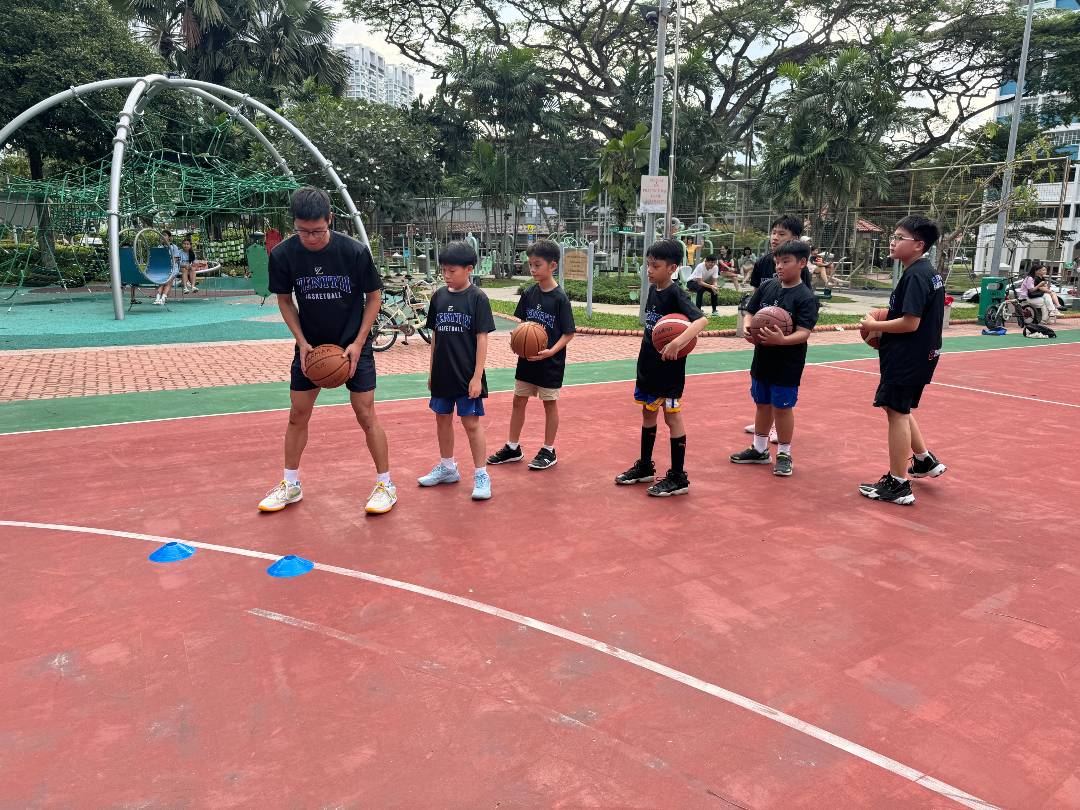
This smaller team structure is one reason why many coaches use 3×3 basketball during basketball training. Players get more touches, more decisions, and more opportunities to develop individual skills under pressure.
At Zenith Basketball Academy, we often explain to players that smaller-sided basketball formats accelerate development because players cannot “hide” on the court.
Another major rule difference is the playing area. 3×3 basketball is played on a half court using one basket instead of a full court with two baskets.
This creates a completely different rhythm. Possessions change quickly, and transitions happen instantly after defensive rebounds or steals.
The smaller court also increases physical contact because players operate in tighter spaces. Footwork, balance, and spacing become extremely important.
According to official guidelines from FIBA, the shorter court dimensions are intentionally designed to create continuous action and faster gameplay.
This is why basketball training for 3×3 basketball often focuses heavily on movement efficiency and quick reactions.
One of the fastest adjustments players must make is the shot clock. In traditional basketball, players usually have twenty-four seconds to create a shot. In 3×3 basketball, the shot clock is only twelve seconds.
That may not sound like a huge difference, but it completely changes decision-making.
There is no time to overthink. Players must attack quickly, react immediately, and make fast reads. Hesitation usually leads to rushed shots or turnovers.
This shorter shot clock is one reason why 3×3 basketball often feels more exhausting mentally than traditional basketball. Players are constantly under pressure to create offense quickly.
At Zenith Basketball Academy, we emphasise decision-making during basketball training because modern basketball increasingly rewards players who can think and react under pressure.
The scoring system in 3×3 basketball is slightly different from traditional basketball.
Shots made inside the arc count as one point, while shots made beyond the arc count as two points. There are no three-point shots.
This creates interesting strategy differences. Outside shooting becomes extremely valuable because a successful long-range shot is worth double an inside basket.
Games are usually played to twenty-one points or until the ten-minute game clock expires. If the score is tied at the end of regulation, overtime begins, and the first team to score two points wins.
This scoring format makes every possession feel important. Momentum can change instantly.
One rule that surprises many new players is how quickly possession changes after a basket.
After a made shot, the defensive team immediately takes possession underneath the basket without stopping play. They must “clear” the ball beyond the arc before attacking.
This creates continuous transitions and very little downtime. Players constantly move from offense to defence within seconds.
Because of this, stamina becomes a huge factor in 3×3 basketball. Players who are not properly conditioned often struggle to maintain intensity throughout games.
If conditioning is something you are working on, our article on How To Improve Basketball Stamina explains why basketball-specific endurance matters so much in fast-paced formats like 3×3 basketball.
Foul rules in 3×3 basketball are also unique.
There are no personal foul limits that remove individual players from the game the same way traditional basketball does. Instead, fouls are tracked as team fouls.
Once a team reaches a certain foul limit, penalty free throws begin. This discourages excessive physical play while keeping the game moving quickly.
The officiating style also tends to allow more physical contact compared to traditional basketball. Players often describe 3×3 basketball as tougher and more physical because of the smaller space and continuous contact.
This is why balance and lower-body strength become so important during basketball training.
Whenever a defensive team gains possession through a rebound, steal, or blocked shot, they must clear the ball beyond the arc before attempting to score.
This rule prevents immediate put-backs and forces teams to reset offensively.
Players must react quickly during these transitions because the game moves extremely fast. Teams that communicate well and move efficiently usually perform much better.
Basketball training that improves spacing, movement, and ball control becomes especially valuable in 3×3 basketball because poor positioning gets punished immediately.
If you are looking to improve ball control under pressure, our article on What Drills Improve Basketball Dribbling Skills? explains how players can become more confident in fast-paced situations.
Many coaches worldwide now use 3×3 basketball as a development tool because of how involved players become.
With fewer teammates and less time to think, players improve decision-making, stamina, ball-handling, spacing, and defensive awareness much faster. Every possession forces players to stay engaged.
This is one reason why basketball training at Zenith Basketball Academy focuses heavily on individual player development rather than simply running repetitive drills.
Our coaches constantly learn and evolve by drawing insights from local and international basketball environments to help players adapt to modern basketball demands, including 3×3 basketball.
For Singapore players especially, 3×3 basketball continues to grow rapidly through schools, community events, and competitive tournaments.
So, what are the rules of 3×3 basketball?
The game uses three players per team, a half court, a twelve-second shot clock, faster possession changes, unique scoring rules, and continuous transitions that create a high-intensity basketball experience.
While the rules may seem simple, they completely transform how the game feels and how players must approach basketball training. 3×3 basketball rewards stamina, quick thinking, strong fundamentals, and efficient movement.
If you want to improve your basketball skills for both traditional and 3×3 basketball, visit Zenith Basketball Academy and explore our basketball training programmes designed to develop confident, game-ready players in Singapore.
A: Each team has three players on the court and one substitute player.
A: Games are usually played to twenty-one points or ten minutes, whichever comes first.
A: Yes. Teams only have twelve seconds to attempt a shot.
A: The smaller court, shorter shot clock, and immediate possession changes create constant action.
Click on the link to find out more about Zenith Basketball Academy’s lesson package. Chat with our head coach today!
Home
About Zenith Basketball Academy
Private Basketball Lessons
Kids Basketball Lesson
Group Basketball Lessons
Shooting Drills
Basketball Coach
Whatsapp Us


