




3×3 basketball has quickly become one of the fastest-growing formats of the sport worldwide. From the Olympics to local tournaments in Singapore, this version of basketball has captured attention because of its speed, simplicity, and intensity. Unlike traditional 5-on-5 basketball, 3×3 strips the game down into a quicker, more explosive format that demands sharp decision-making and versatile skills.
If you’ve ever watched a 3×3 game and wondered how it works, the rules are easier to understand than you might think. But mastering it is a different story. At Zenith Basketball Academy, many players train specifically to adapt to both full-court and 3×3 basketball, helping them build stronger fundamentals and game intelligence.
3×3 basketball is a half-court variation of the sport where each team has three active players on the court and one substitute. It is officially recognised by FIBA and became an Olympic sport in 2020. The format was introduced at the 2010 Youth Olympic Games in Singapore, making Singapore part of its competitive history.
Unlike traditional basketball, the game focuses heavily on quick transitions, individual skill, and space awareness.
Each team consists of four players, but only three are on the court at any time. One player remains on the bench as a substitute.
Substitutions can happen during dead-ball situations or after a scored basket, making player rotation much faster than in standard basketball. This creates a more dynamic game where stamina and adaptability matter a lot.
Because there are fewer players, every player must contribute in scoring, defending, rebounding, and creating plays.
3×3 basketball is played on half of a standard basketball court with just one hoop. This smaller playing area creates constant pressure and faster possessions.
The reduced court size means players are always involved in the action. There’s less time to rest and more emphasis on positioning, communication, and spacing.
In Singapore, many local courts and training spaces can easily accommodate 3×3 setups, making it highly accessible for youth players.
Scoring in 3×3 is simpler but different.
Shots inside the arc are worth 1 point. Shots beyond the arc are worth 2 points. Free throws count as 1 point.
The first team to reach 21 points wins immediately. If neither team reaches 21 within 10 minutes, the team with the higher score wins. If the game is tied, overtime begins, and the first team to score 2 points wins.
This scoring format makes every possession valuable.
One of the biggest differences is the shot clock. In 3×3 basketball, teams only have 12 seconds to attempt a shot, compared to 24 seconds in traditional basketball.
After a team scores, possession changes immediately. The opposing team takes the ball under the basket and must clear it beyond the arc before attacking.
This means there are almost no breaks in play. Players must react quickly and stay mentally sharp throughout the game.
The format is built for speed. Smaller teams, shorter shot clocks, and continuous play force players into faster decisions.
There is less room for set plays and more reliance on instinct, skill execution, and chemistry. Players need strong ball-handling, quick passing, and efficient finishing.
At Zenith Basketball Academy, their coaching system focuses heavily on decision-making, footwork, and offensive reads, all crucial for 3×3 development. Their own 3×3-focused programmes reflect the rising demand for this format in Singapore.
Versatility is the biggest skill.
Since there are only three players, there are no fixed positions. Every player must defend, attack, pass, and rebound effectively.
Conditioning is equally important. The pace is relentless, and players must sustain high energy with limited recovery.
Basketball IQ becomes even more valuable because every mistake can directly lead to points.
This is why many young athletes in Singapore are turning to structured basketball training to improve faster.
Yes, and it continues to grow rapidly.
Singapore has hosted multiple editions of the FIBA 3×3 Asia Cup, strengthening local interest and increasing youth participation. Recent tournaments have shown the sport gaining stronger visibility across schools and competitive clubs.
For young players looking to compete, understanding 3×3 gives them more opportunities to enter tournaments and gain real-game experience.
Absolutely.
While traditional basketball skills transfer over, 3×3 demands quicker reads, tighter spacing, and more all-around ability.
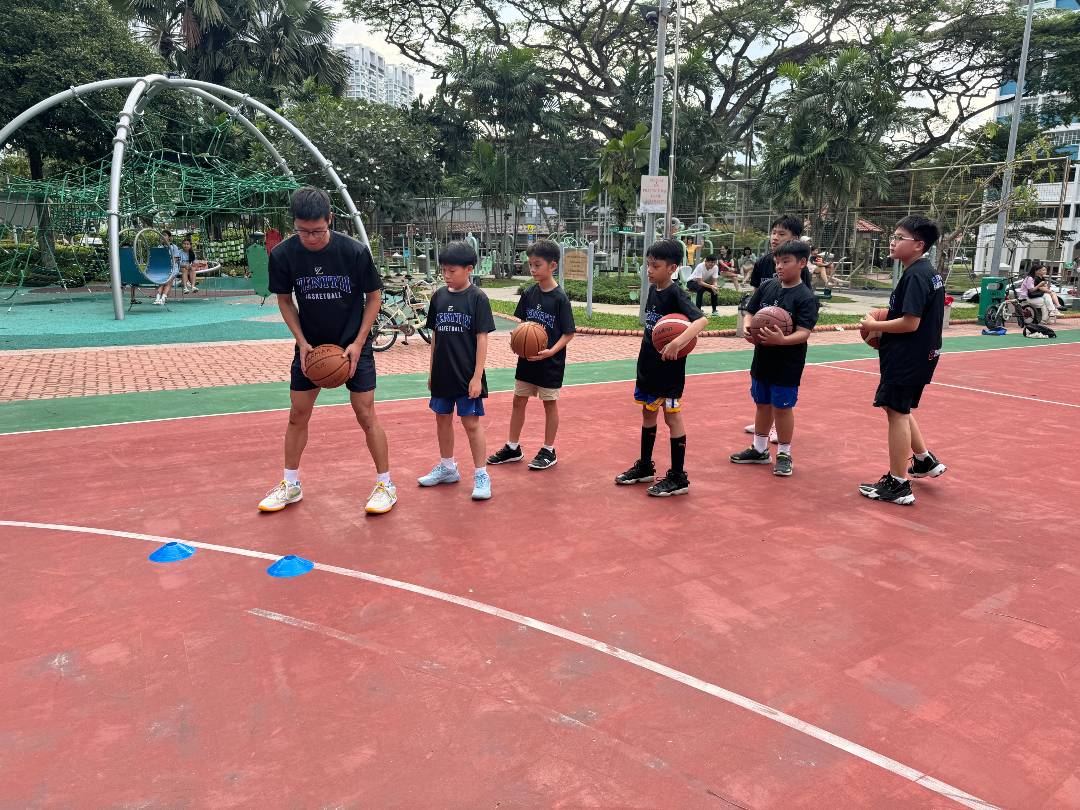
Training with experienced coaches can help players adjust faster. At Zenith Basketball Academy, players receive focused basketball skills training with a healthy coach-to-student ratio, allowing for better skill development and personalised feedback.
Whether you’re a beginner or aiming for competitive 3×3 tournaments, structured training can significantly accelerate your growth.
3×3 basketball may look simple, but it is one of the most demanding versions of the game. It tests speed, intelligence, endurance, and versatility in ways that traditional basketball often does not.
For players in Singapore who want to improve faster, compete harder, and build stronger all-around basketball skills, learning 3×3 is a smart step forward.
If you want to sharpen your fundamentals and prepare for both 3×3 and full-court competition, exploring professional training at Zenith Basketball Academy could be the next move.
A: Not necessarily. It is faster, more intense, and demands higher versatility.
A: A maximum of 10 minutes, or until one team reaches 21 points.
A: Yes. It is a great way for beginners to improve quickly because of the higher involvement.
A: Yes. It officially debuted at the Tokyo Olympics in 2020.
A: Structured academies like Zenith Basketball Academy offer skills-focused training suitable for 3×3 development.
Click on the link to find out more about Zenith Basketball Academy’s lesson package. Chat with our head coach today!
Home
About Zenith Basketball Academy
Private Basketball Lessons
Kids Basketball Lesson
Group Basketball Lessons
Shooting Drills
Basketball Coach
Whatsapp Us


